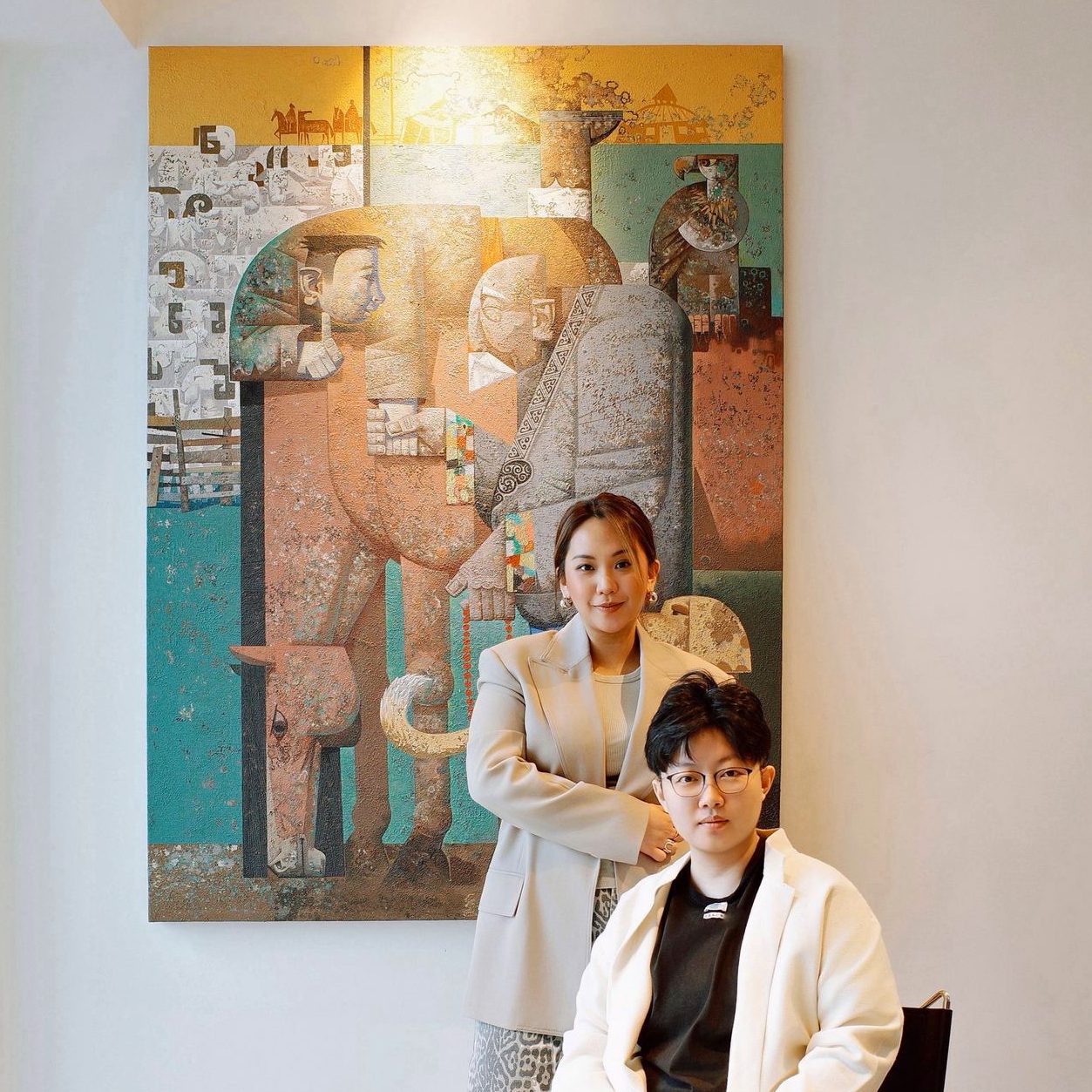
Q&A with Samantha Ho and Aitong Yu, And Studio: We are naturally curious, and it drives our practice
You describe interior design as one of the biggest forms of self-expression. How do you help clients express themselves when they’re unsure who they are? We try not to label any one style too rigidly – we are all layered, sometimes even contradictory. Rather than forcing a fixed identity, we focus on understanding those nuances. Our role often becomes that of a translator. Sometimes a client might say, “I don’t know what I want,” but they will casually mention loving the quiet of a particular hotel, the warmth of their grandmother’s house, or even a fleeting memory. These fragments become our clues. When clarity is less than obvious, understanding what they don’t like becomes just as important; it is honest and just as telling. Design then becomes a process of uncovering rather than imposing. What does being “emotional” in design mean to you? Being emotional in design begins with feeling – first you feel, then you create. It is rooted in empathy — understanding the history and context; how a space can connect, hold memory, identity, and meaning beyond its…

Q&A with Carol Karthe, Ladrilyo: Architecture in the tropics is about understanding airflow, orientation, and the natural behaviour of heat and humidity.
You’ve shared how important it is to keep learning about materials and their ecological footprint. What are some new or emerging materials you’ve recently explored that excite you, and how do you see them shaping future projects? Continuous learning is essential to my practice. Travelling, studying art, listening to craftspeople, observing how different cultures live—these…

Q&A with Fiona Tan, Atelier IF: the ability to distil narrative into essential spatial elements speaks to architecture’s fundamental power to move and transform us.
In your practice, you’ve described a desire to craft spaces that tell the stories of their inhabitants through a tactile and material-based approach. Could you share an example of a project where materiality played a central role in shaping that story? I see each architectural project as an opportunity to create a spatial narrative that…

Q&A with Lee Cherng Yih, Formzero: the roof is more than just shelter; it’s a powerful tool to shape how we live
Formzero describes itself as an architectural research unit that’s deeply rooted in multidisciplinary sustainable design and re-engaging architecture with the tropical landscape in an urban context. Could you share more about how this research function operates practically within your practice? How does it shape your projects on a day-to-day basis? In our practice, research begins…

Q&A with Mark Odion, MOD Studio: The particular hallmark of the firm is simplicity
Tell us about the genesis and development of MOD Studio. We founded MOD Studio in 2016. Since then, we’ve sought to redefine our approach to contemporary architecture by merging minimalism, sustainability and user experience. “MOD” meaning Mark Odion Design may also be derived from the words “Modern”, “Modular”, or “Modify”, reflecting the firm’s philosophy. The…

Q&A with Chan Mun Inn, Design Collective Architects (DCA): I’m an introvert working in an extrovert world
Tell us about the genesis and development of DCA. DCA came about almost 25 years ago when David Chan and I got together to work on bespoke and custom-designed homes, at a time when many architects shied away from them due to their complexities. Both of us have academic backgrounds teaching architecture in universities and…

Q&A with Lee May Anne, MAKK Architects: I have a penchant to search for new challenges
You are the Principle of MAKK Architects, where you run a one-woman show. How do you successfully juggle all the necessary balls simultaneously? I am pretty much a one-woman show but I do work with a group of trusted technical officers that act as my second and third pair of eyes to check on all…

Q&A with Georgina Foo & Genevieve Ang, Studio Gin&G: We have a deep interest in re-evaluating materials in our built environment
As a studio, you are advocates of “shared authorship”. Can you elaborate on what this means and why it is important to you? We believe that shared authorship provides us with a broader perspective and enables us to accommodate the needs and experiences of a diverse array of stakeholders. This concept is important to us…

Q&A with Melvin Tan, Co-founding Partner, LAUD Architects: I want to make positive change for our profession
When you took office as President of the Singapore Institute of Architects (SIA), you laid out priorities similar to the ones presented at the Venice Architecture Biennale i.e. addressing the perennial issues professionals in the industry face, including low wages, a lack of work-life balance, and a high level of stress under project deadlines. What…
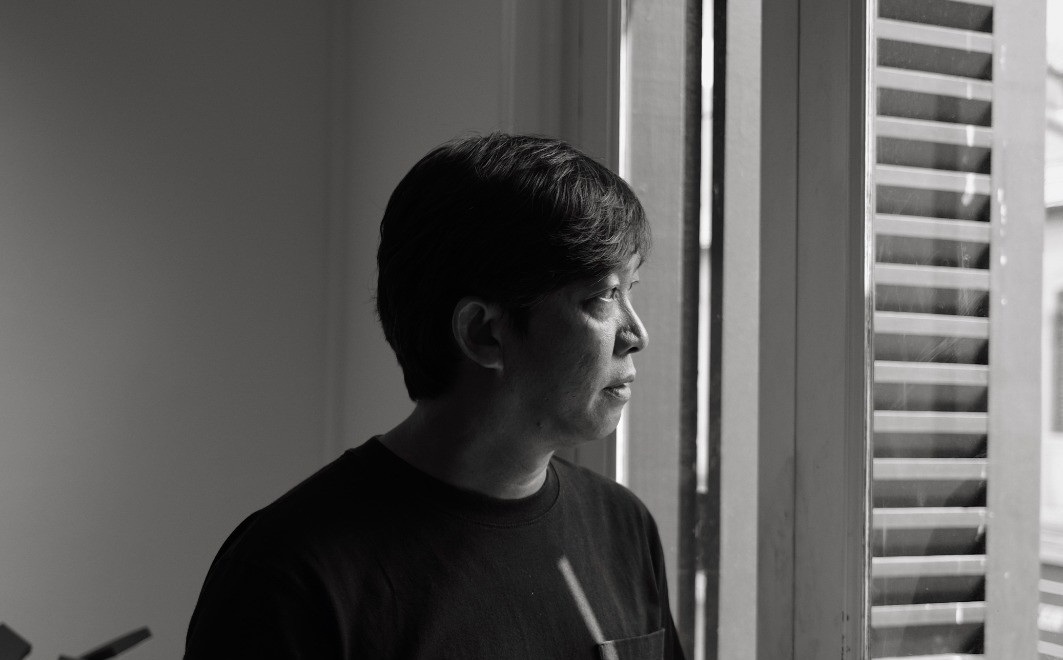
Q&A with Victor Ting, The Carpenter’s Workshop: The design of a home should not be restricted by its walls
Since starting The Carpenter’s Workshop, you must have encountered some unconventional requests from homeowners. Please share a few and how you addressed them. The first example that comes to mind is from Inter-Terrace House. The owner wanted a double-volume ceiling in the two-storey house, while still retaining three rooms on the second floor. We removed…

Q&A with Samuel Lee, Designshop: AI will never be able to replicate the emotional experience of architecture
How did Designshop expand from doing only residential projects, to others such as healthcare, institutional and conservation? Designshop was founded by Joy Chew in 1987, focusing initially on residential interiors. Joy’s fearlessness in taking on new challenges has always inspired me since I joined her in 2010, and, to this day, I continue to uphold…

Q&A with Kee Jing Zhi, Freight Architects: There are a lot of interesting sites in Singapore where we can create unique projects
You’re one of a trio of partners that make up Freight Architects. How do you divide up the work among the three of you? I lead most of the private residential projects, while my partners handle the ones in childcare, senior care and the industrial sector. We work as a team when there are bigger-scale…

Q&A with Woon Chung Yen, Metre Architects: The success of my designs often depend on how far I can reject tried-and-tested spatial templates
Since you founded Metre Architects, you have been on a constant search for spatial patterns that renew your understanding of function and aesthetics. Can you share some of your findings? The act of designing can be defined simply as finding new ways to synthesise function and aesthetics, such as: I then found that the success…

Q&A with Lai Zhenwei & Joseph Wong, JOW Architects: We see site conditions as potential design opportunities
You enjoy experimenting and pushing boundaries in your practice. Can you elaborate on what you mean? It is about challenging what seems to be the norm, and searching for new approaches to tackle the design brief by constantly questioning ourselves. We like to ask if there is another way to achieve the same intent. It…

Q&A with Vanessa Ong & Elisa Massone, MASSONEONG: We value quality over quantity
You both pride yourselves on offering a fresh take on luxury in the built environment. Can you elaborate on what you mean by this and why you felt it needed a makeover? Luxury is often associated with flashy, high-profile items that scream for attention. But there’s a different kind of luxury that we aim for…

Q&A with Ng Ci En, Hock Hoon: What is the basic form of a space or object?
Hock Hoon began life as a carpentry specialist, before transiting into an interior design firm. Can you elaborate on how this occurred? It’s quite a long story; I shall start with the founding of Hock Hoon by my dad, who started working on custom carpentry in 1992. He asked me if I wanted to help…

Q&A with Lim Shing Hui, L Architects: My most interesting work is when I can truly be myself
You pride yourself on not subscribing to stereotypes, as seen through projects such as The House Apartment. How exactly do you do it? In a nutshell, to be myself. I think my most interesting work is when I can truly be myself. Our background, culture, thoughts and personal experiences make each of us unique and…

Q&A with Mikael Teh, The Monocot Studio: Making good design makes me happy
Word has it you’ve juggled 40 projects at a go before, making you incredibly prolific. Just how do you do it? I am extremely lucky to have my dream job. Making good design just makes me happy, as does the ability to apply things that I have learnt throughout my travels into my own projects.…

Q&A with Guz Wilkinson, Guz Architects: A house benefits if there is greenery for it to sit in
You have developed for yourself a reputation of designing houses hidden among gardens. Why is it so important to you to keep going in this direction? I love nature and, to me, a house benefits if there is greenery and gardens for it to sit in and interact with. I also strongly believe that a…

Q&A with Stacey Leong, Stacey Leong Interiors: Every project presents quirks and challenges that ultimately become opportunities
When we caught up in-person, you spoke about how much the kitchen has evolved. Can you elaborate more on how? Kitchen design has definitely earned us some of our best clients. At Stacey Leong Interiors, our aim is to always keep the space as streamlined as possible. We prefer unfussy finishes and classic proportions with…