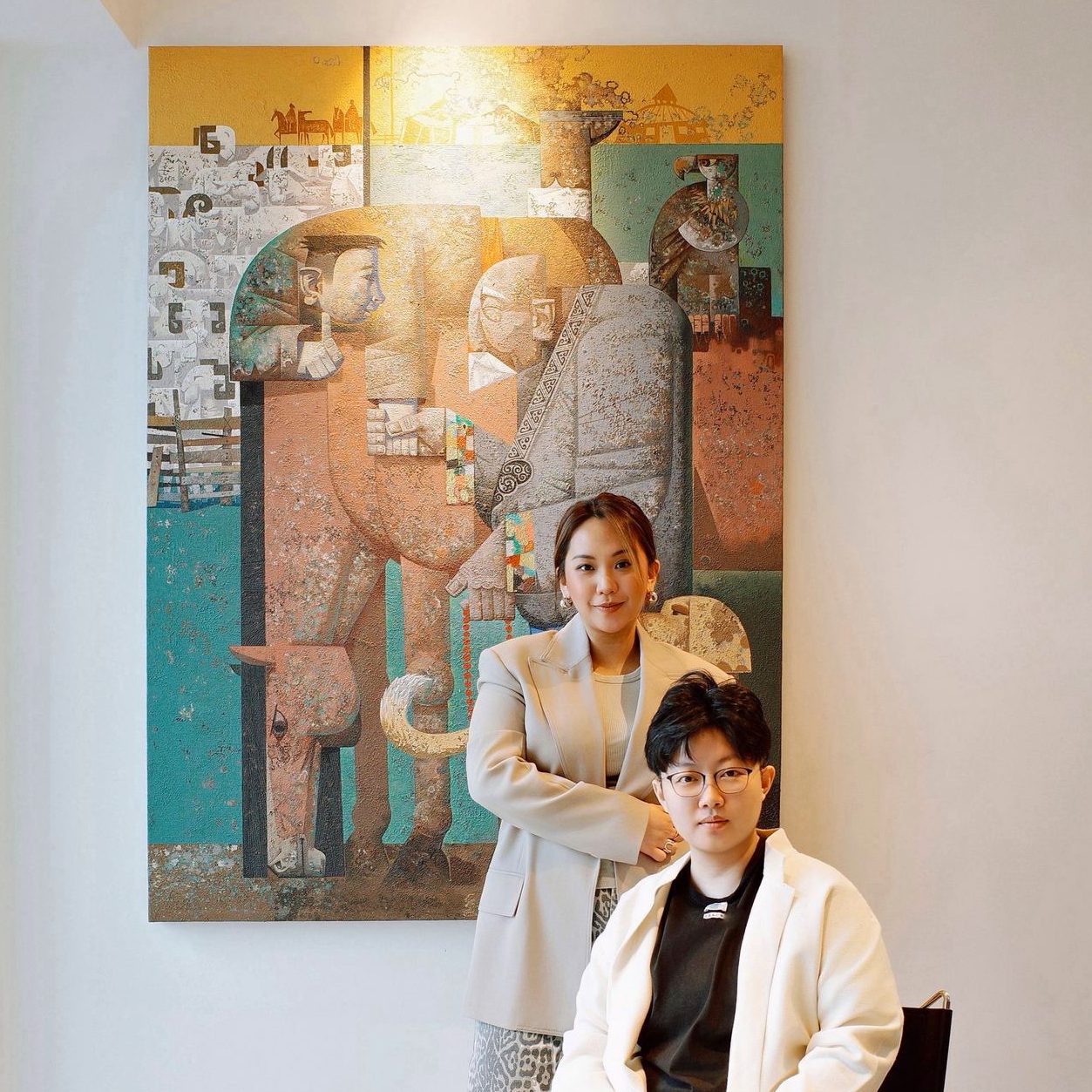
Q&A with Samantha Ho and Aitong Yu, And Studio: We are naturally curious, and it drives our practice
You describe interior design as one of the biggest forms of self-expression. How do you help clients express themselves when they’re unsure who they are?
We try not to label any one style too rigidly – we are all layered, sometimes even contradictory. Rather than forcing a fixed identity, we focus on understanding those nuances. Our role often becomes that of a translator.
Sometimes a client might say, “I don’t know what I want,” but they will casually mention loving the quiet of a particular hotel, the warmth of their grandmother’s house, or even a fleeting memory. These fragments become our clues. When clarity is less than obvious, understanding what they don’t like becomes just as important; it is honest and just as telling. Design then becomes a process of uncovering rather than imposing.
What does being “emotional” in design mean to you?
Being emotional in design begins with feeling – first you feel, then you create. It is rooted in empathy — understanding the history and context; how a space can connect, hold memory, identity, and meaning beyond its physical form; and how it can alter the way you feel and react. When design engages with human behaviour and emotion in this way, it moves beyond aesthetics – it leaves an impression.
Curiosity and sensitivity seem central to your ethos. How do you actively cultivate those qualities in your work?
Curiosity and sensitivity sit at the core of how we work, how our brains work.
We are naturally curious, and it drives our practice. It shapes how we see; training our eyes, our instincts and palettes. We’re always asking questions. There is a constant exchange between us and with the world around us. We challenge each other’s perspectives, question assumptions, and look beyond the immediate brief. Design, to us, is multidisciplinary. It moves across culture, art, fashion, history, psychology, and technology. That ongoing curiosity becomes a kind of momentum — it motivates us to keep looking, seeking, and pushing further in our work.
Sensitivity is a balance between restraint and intention. It is cultivated through observing the site, its atmosphere, and its context. This extends to the way people inhabit a space, how light moves with time, and how materials weather and soften with age. Sensitivity creates an allowance for the client, the architecture and the context to speak.
Which three designers, past or present, have most influenced your work?
Patricia Urquiola – for her strong sensitivity to material, texture, and craft in her work, but it never feels rigid. It’s quite playful, layered, and very human.
Christian Liaigre – discipline and restraint, but precise and emotional.
Wong Kar-Wai – his films are studies of mood, memory, and longing. The way he uses space, colour, and framing to evoke emotion.
Three of your favourite buildings in Southeast Asia?
Lunuganga Estate, Sri Lanka, by Geoffrey Bawa
National Gallery, Singapore, by Studio Milou and CPG Consultants
House of Remembrance, Singapore by Neri&Hu
Samatha Ho and Aitong Yu are founders of And Studio